

Savvy Sightseer - tips and insights for seasoned travelers!


Nestled in the Mediterranean, Sicily is a one-stop destination that lets visitors experience a wide range of history all in one place. Over thousands of years, wave after wave of invaders swept over the island imprinting it with their own history, traditions, culinary tastes and personalities. Arabs, Africans, Greeks, Phoenicians, Byzantines, Normans and Romans all left their mark. And not to be overlooked is Mother Nature’s contribution to the Italian island – gorgeous coastlines and lush fertile vineyards.
From famed Mt. Etna on the east coast to the capital city Palermo on the west, the little island (about the size of Vermont) is a never-ending cornucopia of varied and startling sights. Thanks to two major travel trends - set jetting and agritourism - Sicily has become a major destination for vacationers. Whether drawn by wanting to see the setting where popular shows like HBO's White Lotus or the Godfather were filmed, or to get away from typical tourist landmarks to connect with cultures and nature, or just to enjoy beautiful scenery, travelers are making the island off the so-called boot of mainland Italy a true hotspot.
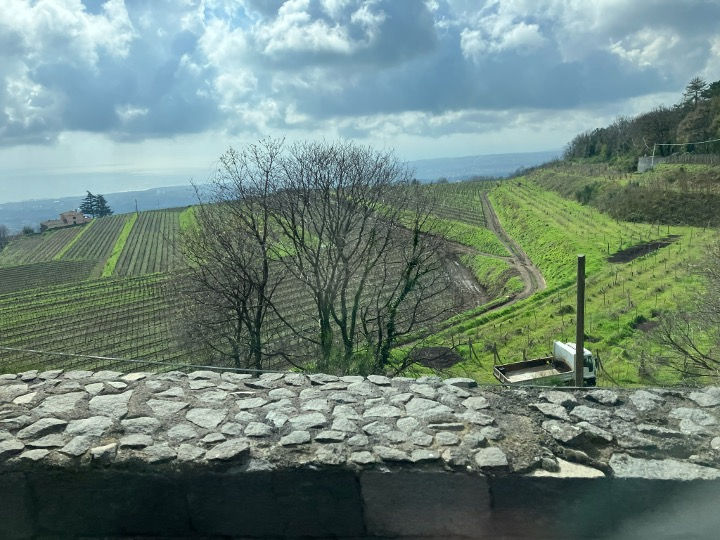
Considered one of the most active volcanoes in the world, Mt. Etna, between the towns of Catania and Taormina, first exploded back in 1500 BC and has been growing consistently ever since. She is referred to by many names: Super Momma or The Friendly Giant, or most often, The Shy Volcano, because it is usually shrouded in clouds and smoke, so the photo above is a rarity. It also provides hidden benefits - the lands surrounding Mt. Etna are among the most fertile in Europe, thanks in large part to volcanic ash. Vineyards, citrus groves and most notably pistachio fields, yielding the famous “green gold” crop that put the town of Bronte on the map, flourish, benefiting local farmers. The black basalt rock - the third hardest substance on earth - is used for such necessities as roads and buildings. Catania's unique mix of basalt and sandstone architecture led to its being dubbed the "city in black and white."
Mt. Etna


The official symbol of Catania, the elephant may be what protects it from Mt. Etna's eruptions.

Click any photo icon on this page to open a slideshow and get more information.
Roman Remains


Dotted throughout the Sicilian countryside are remnants of various dynasties that once ruled the land. Prominent among these are Roman, Elymian, Phoenician and Grecian remains. Mystery surrounds the majestic Doric-columned Temple of Segesta, a monument seemingly out in the middle of nowhere on the western side of the island, but once part of a significant cultural and political center. The Villa Romana - a 4th Century AD wealthy Roman's complex in central Piazza Armerina - has been lauded by UNESCO as “one of the most luxurious of its kind.” It’s a sprawling home with over 50 rooms buried in a massive landslide that preserved the fabulous works of art inside - 37,000 square feet of mosaic flooring, wall art, statues, and other decorative elements. One of the highlights is an over 200’ long floor in a corridor that depicts rounding up animals to ship back to Rome. The mosaic includes ferocious and exotic species like lions, which would later appear in deadly battles between man and beast to provide entertainment at the arena in Italy's capital city, Rome. Lions may also have been a featured act the the Taormina Greek-Roman amphitheater; originally a 5,000-seat venue for plays and other entertainment, eventually enlarged and used for beastly battles as well. Today it hosts the Taormina Film Festival, one of the most popular venues in Europe. And then there's the so-called Dancing Satyr, a mysterious statue that suddenly surfaced in the waters off Mazara del Vallo on the west coast in 1998, frightening a boat of local fishermen who thought it was a real person.
Arts and Crafts


Photo from: forbes.com

From realistic puppets to exquisitely detailed vendor carts, Sicily has wide-ranging treats for the eyes. At the Antonio Pasqualino International Puppet Museum in Palermo, Italy’s only continuous marionette institution, shows have been performed using the hand-made figures, some three-feet tall, without interruption for more than 200 years. Phoenicians figured out how to turn the off-white murex shell of sea snails harvested off Sicily’s west coast in Mozia into a luxuriant - and expensive - purple dye. In Taormina, Lady Florence Trevelyan, exiled from England for her dalliance with Edward VII, amused herself by filling her garden with Victorian Follies - buildings not good for much other than bird watching. In a courtyard outside a Palermo cloistered nuns' monastery, an intricate 48-statue Renaissance depiction of classical myths, Greek and Roman art; a testament to Palermo’s power, wealth and sophistication, became a symbol of civic pride – for some. But something very different to others, especially the abbess, who saw such public nudity as sinful and decadent, leading to it carrying the nickname, "Fountain of Shame." Gargoyles under a balcony are just some of the quizzical architecture found in Ragusa, and vibrantly painted steps welcome visitors to the Kasbah section of Mazara del Vallo. Bold red-themed artistry, whether on an ancient cart or modern Fiat, shows that advertising is an age-old profession - grabbing the attention of buyers makes all the difference!
Churches

Built on top of a former Arab mosque, the building is a blend of Arab and Norman heritage in the Kasbah section of Mazara del Vallo.

Cathedral of St. George decked out for Lent.

Church looms large over town of Ragusa.

Cathedral sports over 70,000 square feet of mosaics, including almost 5,000 lbs of solid 24-karat gold.

Walls and ceiling depict episodes in both the Old and New Testaments, and the lives of the saints.


From 1311 on this monastery was the home of many cloistered nuns of the Dominican order. Once an elder sibling married, they were deemed worthless and shut away in the convent – after the family provided a generous dowry to the operators, which allowed for elaborate decorating of the church.

The nuns lived separated from the outside world, and even attended mass behind a metal grid.
Food!

Harvesting salt has been practiced here since the Phoenicians started a lucrative business some 2500 years ago.


Bronte pistachios are considered the best anywhere.

The unique chocolate confectionary has its roots in Aztec times.

Manna is the secret ingredient that propelled this pastry to a multi-million dollar business in Castelbuono.

Sicily's signature street food - a saffron-infused risotto pick-me-up.

The marzipan sponge cake has quite the back-story!

Decadent and delicious, the typical dessert of Sicily is often made from goat milk giving it a creamy texture.
Agritourism
Travelers in 2026 from across the spectrum – Gen Z to Boomers - are reportedly looking for immersive, hands-on food experiences to anchor their trip. These include farm-to-table dining excursions featuring heritage-inspired dishes that connect place to plate, in a trend known as Agritourism. Supported by the government, many farmers are blending their farm existence with educational opportunities. They welcome visitors eager to learn from organic farmers, then enhance their day by using vegetables and other crops to make and enjoy their own meals. Several farms near Ragusa, in the UNESCO-protected Val di Noto valley, are providing atypical vacation stops for both day-trippers and overnighters who want a mellower and more meaningful stay outside of main cities.


Continue your trip through Italy with a visit to the Milan, Verona, Lake Garda, Lake Como or Lake Maggiore pages,
or go back to the Italy home page.

